
A cast iron fireplace insert is a closed heating unit designed to be installed into an existing fireplace opening or masonry structure. Compared with an open fireplace, a fireplace insert provides better heat control, higher combustion efficiency, improved safety, and a more practical heating experience.
For importers, distributors, fireplace stores, and heating equipment brands, cast iron fireplace inserts are an important product category because they combine traditional fireplace appearance with modern heating performance.
Fireway, operated by Tianjin Bohaibay Trading Co., Ltd., supplies cast iron fireplace inserts, cast iron wood stoves, sauna stoves, and OEM cast iron components for international B2B buyers.
This guide explains what a cast iron fireplace insert is, how it works, whether it is worth buying, how safe it is, and what distributors should consider before sourcing from a manufacturer.
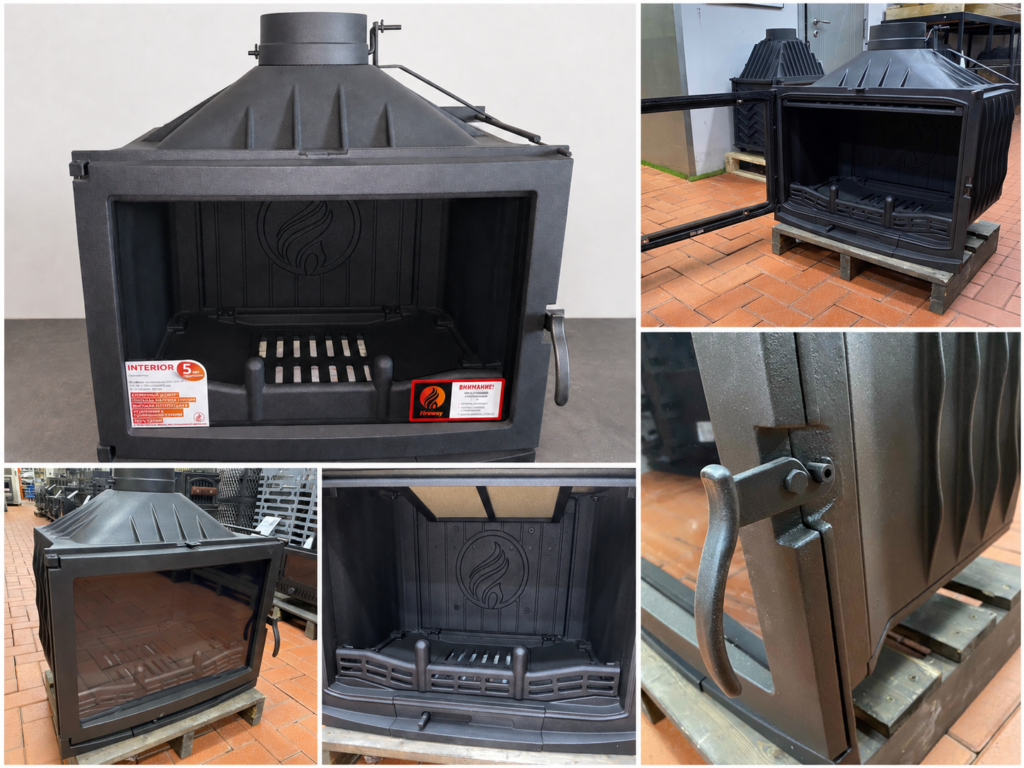
What Is a Cast Iron Fireplace Insert?
A cast iron fireplace insert is a closed firebox installed inside a fireplace structure. It is usually made from cast iron, steel, or a combination of metal components, with a front glass door that allows users to view the flame.
Unlike an open fireplace, which loses a large amount of heat through the chimney, a fireplace insert is designed to control combustion air, improve heat transfer, and reduce unnecessary heat loss.
A typical cast iron fireplace insert includes:
- Cast iron firebox or body structure
- Front glass door
- Air control system
- Flue outlet
- Smoke path or baffle structure
- Grate or combustion base
- Ash collection area
- Heat-resistant sealing rope
- High-temperature coating
- Optional decorative frame or trim
The main purpose of the insert is to turn an inefficient open fireplace into a more effective heating appliance.
How Does a Fireplace Insert Work?
A fireplace insert works by enclosing the fire inside a controlled combustion chamber. Fresh air enters the insert through designed air inlets. This air supports the burning of wood inside the firebox.
The closed structure helps manage the combustion process more efficiently than an open fireplace. Heat is produced inside the firebox and transferred into the room through the cast iron body, glass door, and surrounding structure.
The basic working process is:
- Wood is placed inside the firebox.
- Combustion air enters through controlled air channels.
- The wood burns inside a closed chamber.
- Heat is absorbed by the cast iron body.
- Heat is gradually released into the room.
- Smoke exits through the flue system.
- Ash remains in the lower part of the unit for cleaning.
Because the fire is enclosed, the user has better control over airflow, flame intensity, heat output, and fuel consumption.
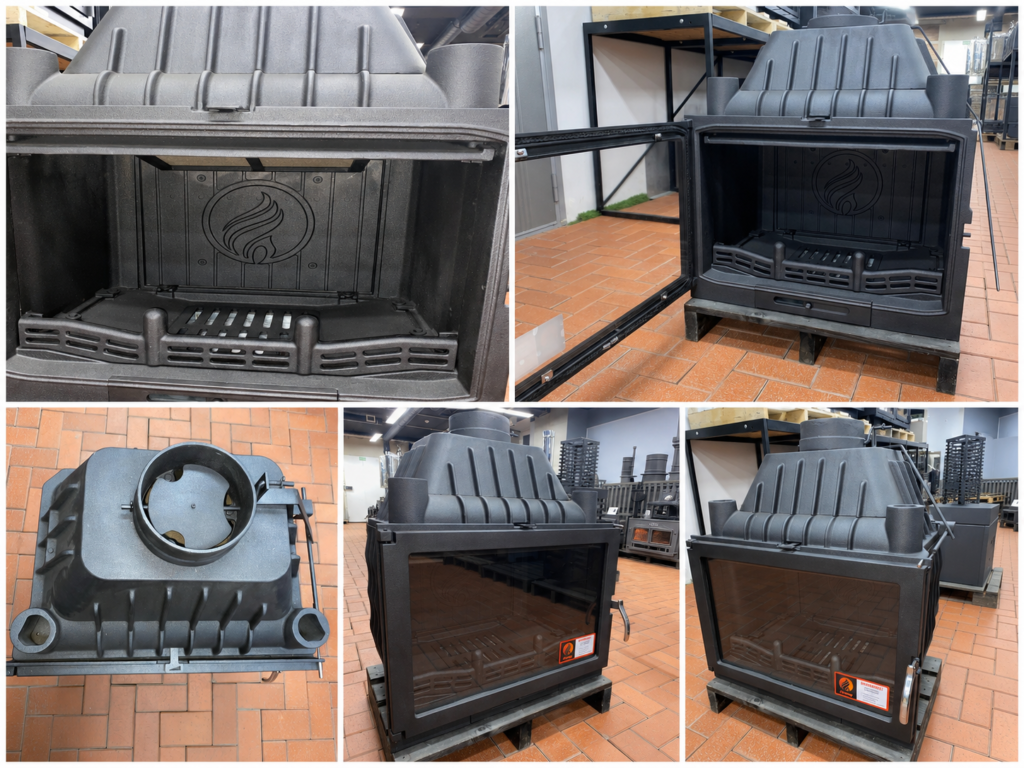
Why Cast Iron Is Used for Fireplace Inserts
Cast iron is widely used in fireplace inserts because it provides strong heat retention and stable thermal performance.
During combustion, the cast iron body absorbs heat from the fire. After the fire becomes weaker, the cast iron continues releasing stored heat into the room. This creates a more stable heating experience compared with lightweight materials.
Main advantages of cast iron include:
- Strong thermal mass
- Good heat retention
- Durable structure
- Resistance to high-temperature operation
- Traditional fireplace appearance
- Long service life when used correctly
- Suitable for decorative surface designs
For B2B buyers, cast iron also gives the product a stronger market position. Many end users associate cast iron fireplace inserts with durability, quality, and long-term heating performance.
Is a Fireplace Insert Worth It?
A fireplace insert is worth considering when the buyer wants better heating performance, improved flame control, and a cleaner fireplace experience compared with an open fireplace.
An open fireplace can provide atmosphere, but it is often inefficient as a heating appliance. Much of the heat escapes through the chimney, and the room may lose warm indoor air during combustion.
A fireplace insert helps solve this problem by creating a closed and more controlled heating system.
Key value points include:
- Better heat output than an open fireplace
- Reduced heat loss through the chimney
- Controlled combustion air
- More stable room heating
- Improved flame visibility through glass
- Lower smoke leakage when installed correctly
- Easier cleaning and daily maintenance
- More modern product appearance
For distributors, fireplace inserts are worth adding to the product range because they serve both replacement demand and new fireplace installation demand.
Are Fireplace Inserts Safe?
A cast iron fireplace insert can be safe when it is properly designed, correctly installed, and used according to instructions.
Safety depends on several key factors:
- Professional installation
- Correct chimney connection
- Proper distance from combustible materials
- Good sealing performance
- Suitable chimney draft
- Correct fuel use
- Regular cleaning and maintenance
- Clear user instructions
The glass and metal parts of a fireplace insert can become very hot during operation. End users should be informed that the appliance is a real heating product, not a decorative electric fireplace.
Important safety reminders include:
- Do not touch the glass during operation.
- Keep children and pets away from the hot surface.
- Use only suitable dry wood fuel.
- Do not burn waste, plastic, or treated wood.
- Keep the chimney clean and unobstructed.
- Follow local installation standards.
- Use a professional installer where required.
For B2B buyers, safety is not only about product design. It also depends on documentation, installation guidance, packaging labels, and after-sales communication.
Fireplace Insert vs Open Fireplace
A cast iron fireplace insert and an open fireplace serve different purposes.
An open fireplace is mainly decorative. It creates a traditional flame atmosphere but usually has poor heat efficiency. A large amount of warm air may escape through the chimney.
A fireplace insert is more suitable for users who need both flame view and practical heating.
| Item | Open Fireplace | Cast Iron Fireplace Insert |
|---|---|---|
| Flame View | Good | Good |
| Heating Efficiency | Lower | Higher |
| Airflow Control | Limited | Better |
| Smoke Control | Less stable | More stable when installed correctly |
| Heat Retention | Low | Better with cast iron body |
| Safety | More exposed flame | Enclosed firebox |
| Daily Cleaning | More ash and smoke exposure | Easier to manage |
| Heating Use | Mostly decorative | Practical heating appliance |
For markets with cold winters, a fireplace insert is usually easier to position as a functional heating product.
Fireplace Insert vs Freestanding Wood Stove
Both fireplace inserts and freestanding wood stoves can burn wood and provide heat. The main difference is installation.
A fireplace insert is installed into a fireplace opening or masonry structure. It is suitable for homes where the customer already has a fireplace or wants a built-in appearance.
A freestanding wood stove is installed independently in the room and usually requires its own flue connection. It is easier to display as a standalone product and may be more flexible for installation.
| Item | Fireplace Insert | Freestanding Wood Stove |
|---|---|---|
| Installation | Built into fireplace opening | Freestanding installation |
| Appearance | Integrated fireplace look | Standalone stove look |
| Space Use | Saves floor space | Requires floor area |
| Market Demand | Renovation and fireplace replacement | New heating installation |
| Buyer Type | Fireplace stores, renovation users | Stove retailers, general heating buyers |
For distributors, carrying both categories can help cover more customer scenarios.
Key Materials and Components
A good fireplace insert depends on more than the cast iron body. B2B buyers should also check the component system.
Important components include:
Cast Iron Body
The body should be strong, dimensionally stable, and suitable for repeated heating and cooling cycles.
Heat-Resistant Glass
The front glass should withstand high operating temperatures and provide a clear flame view.
Sealing Rope
The sealing rope helps maintain airtight performance around the door and glass area.
Air Control System
A proper air control structure helps manage combustion intensity and heat output.
Flue Outlet
The flue outlet must match the chimney system and installation requirements of the target market.
Surface Coating
High-temperature paint helps protect the surface and improve product appearance for retail display.
For distributors, stable component selection is important because end users judge the product by appearance, flame visibility, heating comfort, and daily operation.
What B2B Buyers Should Check Before Ordering
Before sourcing cast iron fireplace inserts, importers and distributors should review both product details and supplier capability.
Key points include:
- Product dimensions
- Nominal heat output
- Flue diameter
- Firebox material
- Glass size and type
- Packaging method
- Loading quantity
- Certification documents
- Installation manual
- Spare parts availability
- OEM possibility
- Delivery time
- After-sales communication
For European markets, buyers should also confirm the required certification direction before placing bulk orders. Technical documents are important for retail sales, customs communication, and local compliance.
Fireway Cast Iron Fireplace Insert Supply
Fireway supplies cast iron fireplace inserts for B2B buyers, including importers, distributors, fireplace stores, retail chains, and OEM partners.
Our fireplace insert range is suitable for customers who need:
- Cast iron fireplace inserts
- Wood-burning fireplace inserts
- OEM fireplace insert supply
- Cast iron firebox components
- Fireplace insert parts
- Private label cooperation
- Export supply from China
Fireway can support customers with product information, technical communication, export documentation, and long-term supply planning.
Suitable Buyers
Cast iron fireplace inserts are suitable for:
- Stove and fireplace importers
- Heating equipment distributors
- Fireplace stores
- Retail chains
- Construction and renovation suppliers
- OEM stove brands
- Buyers looking for cast iron heating products from China
For distributors, this product category can support both showroom sales and project-based supply.
FAQ
What is the main advantage of a cast iron fireplace insert?
The main advantage is better heat control and heat retention compared with an open fireplace. The closed cast iron structure helps improve heating performance and daily usability.
Can a fireplace insert replace an open fireplace?
Yes. A fireplace insert is often used to upgrade an existing fireplace opening into a more efficient heating appliance. Final installation must match the chimney and local requirements.
Is a fireplace insert suitable for continuous heating?
It can support practical residential heating when correctly selected, installed, and operated. Actual performance depends on room size, insulation, chimney draft, fuel quality, and local climate.
Does the glass become hot during use?
Yes. The glass and metal parts can become very hot during operation. Users should avoid touching the appliance while it is burning or cooling down.
What fuel should be used?
Dry natural wood is usually the recommended fuel for wood-burning fireplace inserts. Wet wood, treated wood, plastic, and waste materials should not be used.
Can Fireway support OEM fireplace insert projects?
Yes. Fireway can discuss OEM and private label cooperation for suitable B2B projects, including cast iron components, product structure, packaging, and documentation requirements.
Conclusion
A cast iron fireplace insert is a practical heating product that combines flame view, enclosed combustion, heat retention, and improved fireplace performance.
For end users, it can make a fireplace more useful and easier to control. For distributors, it is a valuable product category because it serves renovation demand, fireplace replacement demand, and residential heating demand.
Fireway provides cast iron fireplace inserts and related cast iron heating products for international B2B buyers. If your company is looking for a cast iron fireplace insert supplier, OEM partner, or Chinese foundry for fireplace heating products, Fireway can review your requirements and provide suitable product support.
