
Direct Answer:
Modern cast iron stoves achieve high combustion efficiency and eco-friendly performance through optimized airflow control, secondary combustion systems, and precise combustion chamber design. These technologies allow more complete fuel burning, reduced emissions, and compliance with strict environmental standards.
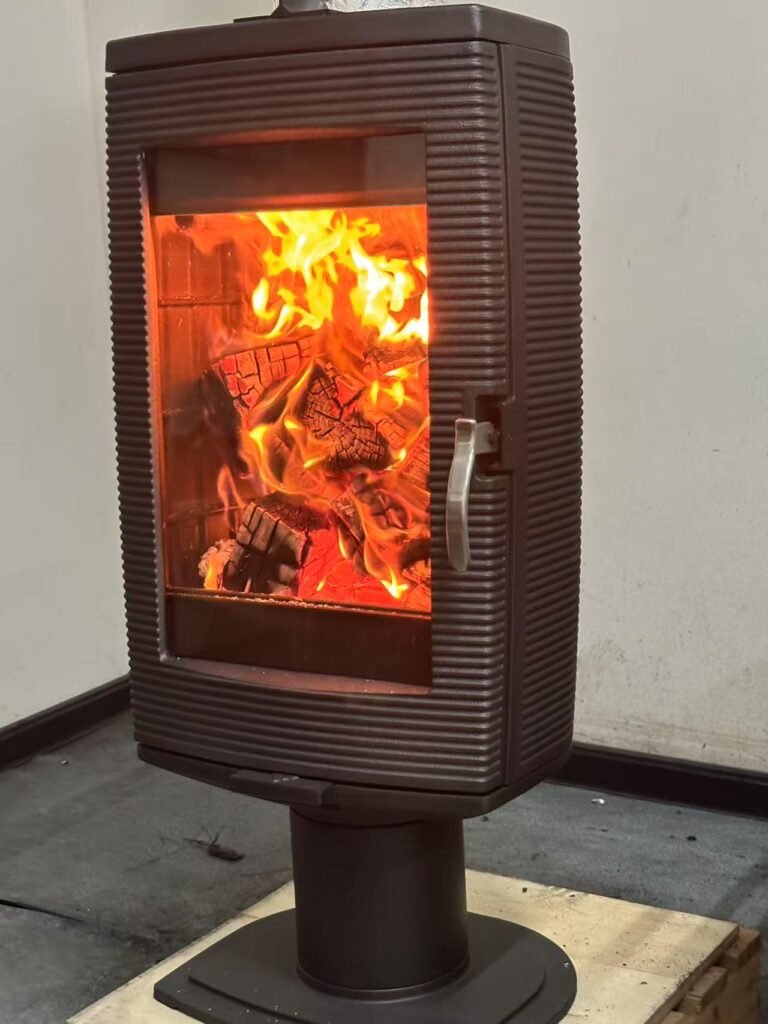
What Is Combustion Efficiency in Cast Iron Stoves?
Combustion efficiency describes how effectively a cast iron stove converts the chemical energy stored in firewood into usable heat. High-efficiency stoves extract more heat from the same amount of fuel, resulting in lower wood consumption and reduced emissions.
Modern cast iron stoves typically reach efficiency levels above 75%, significantly outperforming traditional fireplaces and older stove designs.
Key Design Elements That Improve Combustion Efficiency
Optimized Airflow Management
Advanced airflow design ensures that oxygen is delivered precisely where it is needed during combustion. Separate primary and secondary air inlets allow controlled burning and stable flame behavior.
Secondary Combustion Technology
Secondary combustion systems re-burn unburned gases released during primary combustion. By introducing preheated air into the upper combustion chamber, these gases ignite again, generating additional heat and significantly reducing smoke.
High-Thermal-Mass Cast Iron Structure
Cast iron has a high thermal mass, enabling it to absorb heat during combustion and release it slowly over time. This characteristic improves overall heating efficiency and provides stable indoor temperatures.

Eco-Friendly Design Principles in Modern Cast Iron Stoves
Reduced Particulate and CO Emissions
More complete combustion reduces particulate matter (PM) and carbon monoxide (CO) emissions. This is essential for meeting environmental regulations and improving indoor and outdoor air quality.
Compliance with ECOdesign Standards
Modern cast iron stoves designed for the European market must comply with ECOdesign 2022 requirements. These standards limit emissions and set minimum efficiency thresholds to ensure environmentally responsible heating.
Efficient Use of Renewable Fuel
Firewood is a renewable energy source when managed responsibly. High-efficiency cast iron stoves maximize the energy extracted from each log, reducing overall fuel consumption and environmental impact.

Why Combustion Efficiency Matters for Users and Distributors
High combustion efficiency benefits end users through lower heating costs, cleaner operation, and reduced maintenance. For distributors and OEM partners, it ensures regulatory compliance, easier market entry, and long-term product competitiveness.

Conclusion
Combustion efficiency and eco-friendly design are defining characteristics of modern cast iron stoves. Through advanced airflow systems, secondary combustion technology, and robust cast iron construction, these stoves provide efficient, clean, and reliable heating solutions for today’s market.
About Fireway
Fireway is a cast iron stove manufacturer with an in-house foundry and EU-focused production standards. We design and produce high-efficiency cast iron stoves for distributors, importers, and OEM partners worldwide.
